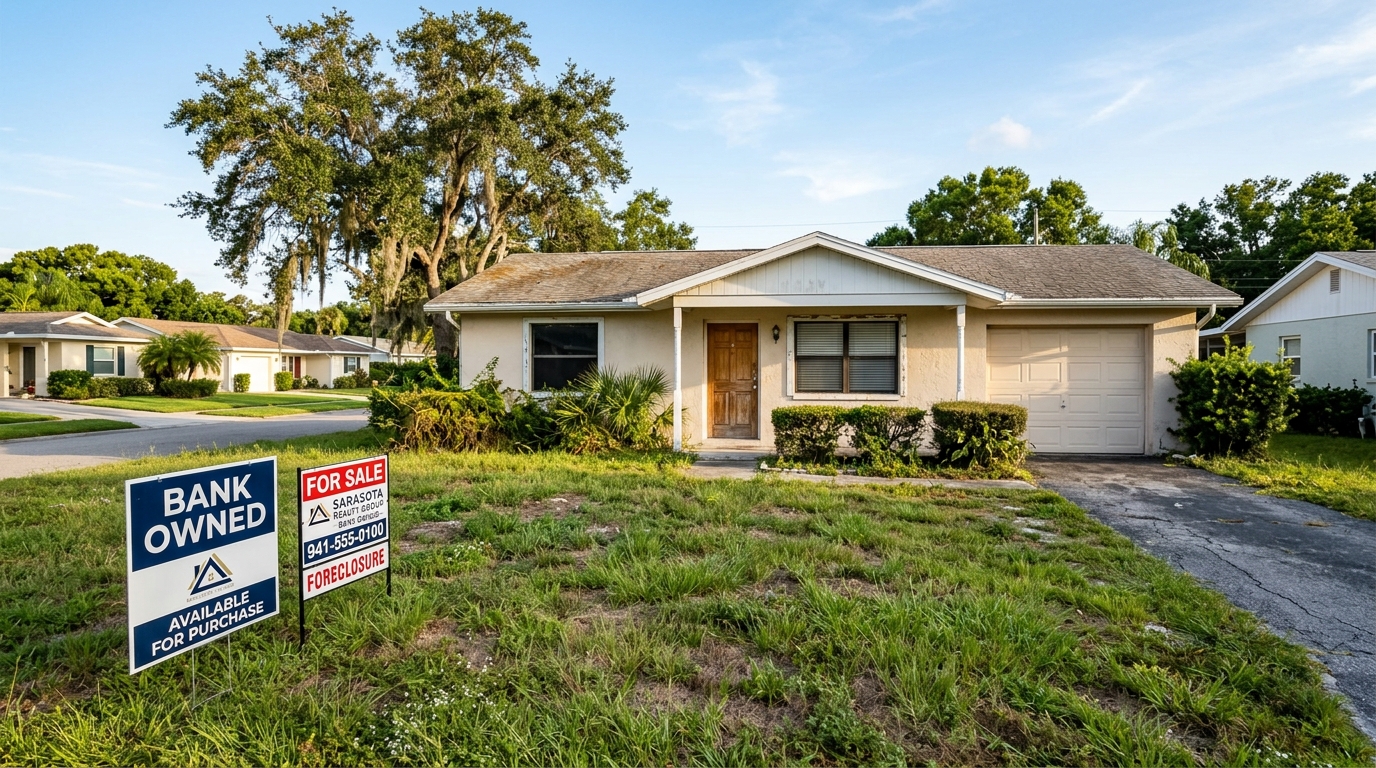
I'll never forget the first time a lender asked me about my debt-to-income ratio. I nodded confidently, assuming it was just another number on the paperwork. Boy, was I wrong. That single percentage became the deciding factor in whether I could buy the home I wanted. It turns out, your DTI matters far more than most people realize, and if you're thinking about buying in Sarasota, understanding yours should be your first priority.
Your debt-to-income ratio, or DTI, is essentially a financial health scorecard that lenders use to determine if you can actually afford a mortgage. It's straightforward: it tells the lender how much of your gross monthly income is already spoken for by debt payments. Add up all your monthly debt obligations, divide that number by your gross monthly income, and you've got your DTI. That's it. Simple math, but surprisingly consequential.
Why Your DTI Matters More Than Ever in 2026
Here's what most people don't understand: lenders care less about what you're worth and more about what you can actually pay each month. In 2026, with average 30-year fixed rates at 6.2%, a good DTI leaves room for rising property taxes and insurance amid climate-related costs. In Sarasota specifically, where property values continue to climb and homeowners insurance is a real consideration, your DTI becomes even more critical.
The lower your DTI, the higher your approval success and the better your interest rate. This isn't just about getting approved—it's about getting approved on terms that don't drain your bank account. A buyer with a 28% DTI will qualify for better rates than someone sitting at 42%, and over the life of a 30-year mortgage, that difference translates to tens of thousands of dollars.
A high DTI means much of your income is already committed, which can make home loan approval harder because lenders view you as carrying less room for a new loan payment. Think of it like a bucket: if your debt has already filled it to the brim, there's no room for a mortgage payment, no matter how much you want that home.
Understanding the Two Sides of DTI
Lenders look at DTI in two ways, and knowing the difference can help you understand what they're evaluating. Front-end DTI measures housing-related expenses—such as your expected monthly mortgage payment, property taxes, homeowners insurance, and HOA dues—in relation to your gross income. This is the pure housing cost component.
Back-end DTI includes all recurring debt payments, such as credit cards, auto loans, student loans, and personal loans. This is the ratio most lenders use when evaluating your financial health. Your back-end ratio is the one that usually determines whether you get approved or denied.
Here's something that surprises people: Your DTI doesn't include monthly bills and everyday costs like groceries or utilities. Instead, it focuses only on regular debt payments that appear on your credit report. So that $200 electric bill doesn't count, but your $150 car payment absolutely does.
What Counts as "Good" in 2026
The rule of thumb most mortgage lenders consider is whether your total monthly debt payments (including your mortgage payment) account for 36% or less of your monthly gross income. This is the golden standard, the 36% threshold that opens doors to better rates and easier approvals.
Most traditional lenders want to see a total DTI of 43% or less. However, automated underwriting can approve ratios of up to 50% if there are other factors that make up for it, such as a high credit score or a lot of cash reserves. So while 36% is ideal, there's definitely wiggle room depending on your overall financial picture and the type of loan you're pursuing.
A DTI under 36% usually unlocks the best interest rates because lenders see you as low-risk. A DTI over 45% makes things tricky, though not impossible. If you're sitting in that 45% to 50% range, you'll still have options, but you'll likely pay more for your mortgage.
Different Loans, Different Standards
Not all mortgages are created equal, and neither are their DTI requirements. FHA loans let you have a higher DTI ratio than regular loans, which is why they are popular with first-time home buyers who already have debt. If you're a first-time buyer in Sarasota dealing with student loans or credit card balances, an FHA loan might be your pathway to homeownership.
Through automated underwriting, some FHA borrowers get approved with back-end ratios exceeding 50%. That flexibility is a big deal for buyers who carry student loan debt or other recurring obligations. Government-backed programs were designed with people like you in mind.
VA loans, available to eligible veterans and active-duty service members, don't have a hard DTI cap. The VA uses 41% as a guideline, but the real decision comes down to residual income, which is the amount of money left over each month after all major obligations are covered. If you served your country, you've earned some benefits in the lending world.
How to Calculate Your Own DTI
Let me walk you through this because it's easier than you might think. Take all your monthly debt payments—your car loan, credit cards, student loans, any personal loans—add them all up. Now divide that number by your gross monthly income (that's before taxes). Multiply by 100, and boom, you have your DTI percentage.
Let's use a real example. Say you make $5,000 gross each month and your monthly debts total $1,800. That's $1,800 divided by $5,000, which equals 0.36, or 36% DTI. You're right at that ideal threshold.
When calculating monthly debt for the DTI, include only the minimum balance for credit cards, even if you pay the total balance each month. This is important because lenders assume you might only make minimum payments, so they calculate conservatively.
Strategies to Lower Your DTI Before You Buy
If your DTI is higher than you'd like, don't panic. You can lower your DTI by reducing debt, increasing income, or adjusting the size of your home loan. Let's break these down.
Reducing debt is the most direct approach. The best ways to lower your DTI before applying for a mortgage are to pay off your credit cards, avoid taking on new debt, and make more income. Every dollar of debt you eliminate improves your ratio immediately. If you have three months before you want to start house hunting in Sarasota, use that time to aggressively pay down credit cards.
Refrain from taking on new debts before applying for a mortgage, as this can increase your DTI. This means holding off on car loans, furniture financing, or other new obligations. Lenders pull your credit right before closing, so a new debt can still tank your deal at the last minute.
Increasing your income works too, though it requires more time. If you have side jobs or freelance work, ensure you document this income to present a more favorable financial picture to lenders. If possible, negotiate for a raise or seek higher-paying job opportunities to boost your income. Some documentation requirements apply here—you'll typically need two years of history for side income—but it absolutely counts.
Your Next Steps in Sarasota
As a real estate agent serving Sarasota, I've worked with countless buyers who thought their DTI disqualified them from homeownership. Spoiler alert: many of them are now homeowners. The key is understanding where you stand before you start looking at properties and making an offer.
I recommend you calculate your DTI honestly first. Head to HOUSEJET and explore homes in your price range, but don't fall in love with a property until you've talked to a lender about your actual borrowing power. Knowing your DTI gives you clarity, confidence, and leverage when you're ready to make an offer.
DTI isn't some arbitrary number designed to make homebuying harder. It exists because lenders want to make sure you won't overextend yourself. A mortgage that fits comfortably within your DTI is a mortgage you can actually afford, and that's what separates dream homeownership from financial stress.
The homes in Sarasota aren't going anywhere, and neither are your dreams of owning one. Take control of your financial picture, understand your DTI, and let's find you the right home at the right time. That's what I'm here for.